WhatsApp/Wechat: +86 15176702681
ADD: Yuelong Town Industrial Park, Tianjin, China


 Fasteners are an indispensable type of component in modern manufacturing. Whether in construction engineering, automobile manufacturing, home appliance production, or high-tech fields such as aerospace and electronic equipment, fasteners play a crucial role. They are used to securely connect different components together, ensuring the stability and safety of the structure. This article will explore several common fastener products, introducing their characteristics, application areas, and how to select the appropriate fastener according to your needs.
Fasteners are components used for mechanical connections, typically including bolts, screws, nuts, washers, rivets, etc. These components securely connect two or more parts together through rotation, pressure, or other means, thereby ensuring the stability of equipment or structures. Fasteners play an important role in the production and maintenance of various industries.
According to different functions and usage methods, fasteners can be classified into various types, mainly including:
Bolts:Used to connect two or more parts, using threads to cooperate with nuts;
Screws: Similar to bolts, usually used to connect smaller or thinner materials;
Nuts: Used with bolts to fix them in place;
Washers: Used to connect bolts and nuts, increasing the contact area and preventing slippage;
Rivets: Used to connect non-removable parts, usually suitable for situations where threaded connections are not possible.
The specific selection of these fasteners depends on factors such as the connecting materials, required strength, and environmental conditions.
(1) Definition and Application of Bolts
Bolts are one of the most common fasteners, usually consisting of a head and a shank. The shank of the bolt has threads, which can be used with corresponding nuts. Bolts are widely used in many industries such as construction, machinery, automobiles, and home appliances to fix two or more parts.
(2) Types of Bolts
Ordinary Bolts: Used for general connections, widely used in machinery, construction, and automotive fields;
High-Strength Bolts: Suitable for high-load, high-strength connections, such as bridge construction and heavy machinery connections;
Anti-Loosening Bolts: Designed with anti-loosening function, typically used in environments with high vibration;
Self-Tapping Bolts: Suitable for connections that do not require pre-drilling, commonly used for connecting plastics and thin metal plates.
(3) Considerations When Selecting Bolts
Load Requirements: Select bolts suitable for the load to avoid breakage or loosening due to excessive load;
Material Selection: Select appropriate bolt materials based on the materials being connected, such as stainless steel, carbon steel, alloy steel, etc.;
Environmental Conditions: For special requirements such as corrosion resistance and high temperature resistance, bolts with corrosion resistance or high temperature resistance properties should be selected.
(1) Definition and Application of Screws
Screws are similar to bolts, but are typically used for connecting thinner or smaller materials. Screws have small heads, and common types include Phillips head screws, socket head cap screws, and flat head screws. Screws are commonly used in electronic equipment, home appliances, furniture, and decoration projects.
(2) Types of Screws
Wood Screws:Specifically designed for wood connections, with deep threads to ensure strong connection force;
Self-Tapping Screws: Self-tapping screws allow direct drilling into materials, commonly used for thin metal sheets, plastics, etc.;
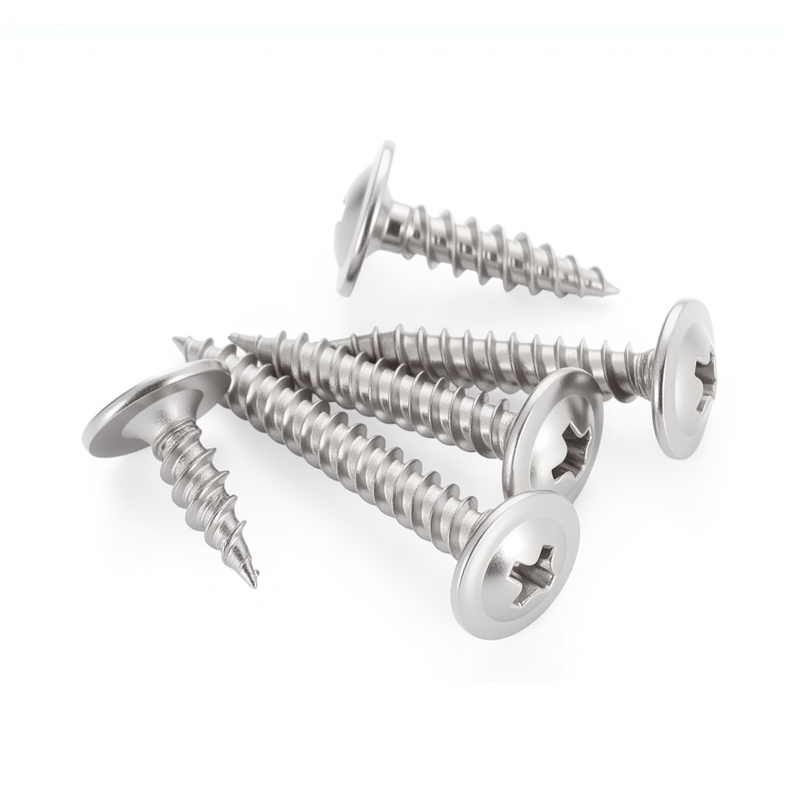
Machine Screws: Used for connecting mechanical equipment, usually used in conjunction with nuts.
(3) Screw Installation
Installation Tools: Screwdrivers, impact screwdrivers, etc., can be used for installation;
Torque Control: Control the torque according to the screw specifications and load requirements to avoid overtightening or loosening;
Using Washers: Washers prevent over-tightening of screws, which can damage materials, and also increase the stability of the connection.
(1) Definition and Application of Nuts
Nuts are fasteners used in conjunction with bolts, typically to secure bolts and prevent them from loosening. The inner hole of the nut matches the thread of the bolt, and the connection is secured by tightening the nut. Nuts are widely used in machinery, construction, automobiles, and other fields.
(2) Types of Nuts
Hexagonal Nuts: The most common type of nut, typically used for connecting bolts, providing strong tightening force;
Lock Nuts: Anti-loosening function, commonly used in environments with high vibration;
Wing Nuts: Easy to rotate manually, typically used in tool-free installation environments.
(3) Nut Selection
Size Matching: Ensure the nut and bolt are perfectly matched in size to prevent loosening or failure to secure.
Material Selection: The nut material must match the bolt material, typically stainless steel, carbon steel, alloy steel, etc.
Corrosion Resistance: Select nuts with corrosion resistance, such as galvanized nuts, based on the environment.
(1) Definition and Application of Washers
Washers are connecting components used between bolts and nuts, typically to increase contact area, distribute load, and prevent slippage. Washers also prevent bolts and nuts from loosening due to vibration or pressure, and are widely used in machinery, automobiles, construction, and other fields.
(2) Types of Washers
Flat Washers: The most common type of washer, with good pressure distribution capabilities;
Spring Washers: Elastic washers that effectively prevent bolts from loosening;
Locking Washers: With locking function, they increase connection stability and prevent loosening.
(3) Washer Selection
Material: Select appropriate materials based on the application environment, such as stainless steel, carbon steel, copper, etc.;
Size: The size of the washer should match the size of the bolt and nut to ensure proper functioning;
Environmental Adaptability: In humid or corrosive environments, washers made of corrosion-resistant materials should be selected.
(1) Definition and Application of Rivets
A rivet is a fastener used to connect non-removable components. One end of the rivet is stretched using a riveting tool, causing it to expand and forming a fixed connection. Rivets are widely used in aerospace, automotive, construction, and electronic equipment fields, and are suitable for environments where connections cannot be made from both sides.
(2) Types of Rivets
Blind rivets: Installed from only one side, suitable for situations where space is limited and the other side is difficult to access;
Solid rivets:Require installation from both sides, suitable for connections requiring high strength;
Closed rivets: The rivet head is closed, often used in special applications such as waterproofing and dustproofing.
(3) Rivet Selection
Installation method: Select the appropriate rivet type based on the operating space, such as blind rivets;
Material: Select rivets made of suitable materials, such as aluminum alloy or steel;
Strength requirements: Select rivets of different strengths based on the strength requirements of the connection.
When selecting fasteners, the application environment must be considered first. For example, in high-temperature, humid, or highly corrosive environments, fasteners with high-temperature and corrosion resistance should be selected, such as stainless steel or galvanized materials.
The selection of fasteners also needs to consider the load requirements of the connected components. For example, for connections with high loads and frequent vibrations, high-strength bolts or nuts should be selected to ensure the safety of the connection.
Choose the appropriate fastener type based on the installation conditions. If installation space is limited, blind rivets or small screws can be selected. If quick installation is required, self-tapping screws or nuts can be chosen.
Fasteners are key components that ensure structural stability and safety. By understanding the characteristics, applications, and selection criteria of various common fasteners, you can select the most suitable fastener products according to different usage requirements. Whether it's bolts, nuts, washers, or rivets, they all play an important role in various industries. Proper selection of fastenerscan improve the quality, efficiency, and safety of projects.
If you are looking for high-quality fasteners,you can visit our website:www.zxydfastener.com .Please contact us by +86 15176702681 or admin@tjzxjt.com if you have any questions.


